
Key findings of the investigation
- Pages calling for the election of President Kais Saied are administered from Senegal, France, Britain and Kuwait, and among their supervisors is a Togolese supervisor. Four of them were born in one day, July 25, 2024, and two pages of the same text were printed alphabetically.
- Not one of the 67 pro-president ads names a funder. Every ad whose currency appeared was paid for in a foreign currency, mainly euros and dollars.
- A group of 9 pages linked to a pro-president influencer based in France published 31 pro-president ads, 26 of them in euros, without any of them disclosing who paid.
- In 2019, the Court of Audit identified 30 unofficial pages supporting the candidate, run by 120 administrators. Their names have still not been published after seven years.
- The law prohibits foreign financing, and ISIE Resolution 546 requires the candidate to report the advertisement made for his benefit. Elyssa couldn't find any evidence of their application on these pages, while critics of the authority were suing for what they posted online.
- Meta disabled pro-president pages, including the four pages, without publishing anything about them in its reports.
Who pays to talk to Tunisians?
On Facebook, the space is sold to those who pay. Since 2019, I've paid many pages for Tunisians to talk about their president. This investigation follows the pages calling on the president: Who's paying, who's running, and who's asking what they're doing.
Elyssa analyzed 626 funded political ads that mentioned the president's name, including 67 ads supporting him. Then the pages that published these ads, 222 pages, followed: When she was born, what names she bore, where she was run.
One detail governs all of the following: The Tunisian dinar is not the currency of Meta's advertising accounts. Every advertisement in Tunisia is then paid in foreign currency. The currency reveals the settings of the advertising account, no identity of the payer or where he resides.
Every figure in this investigation is documented by Elyssa with its date.
The rules exist
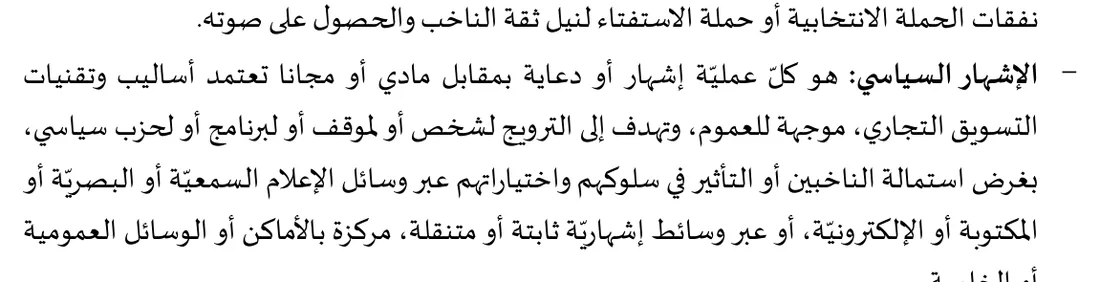
Before the pages, the rules. Tunisia's electoral law defines political advertising as any advertisement, for free or charge, that adopts commercial marketing methods to win voters, including electronic media.
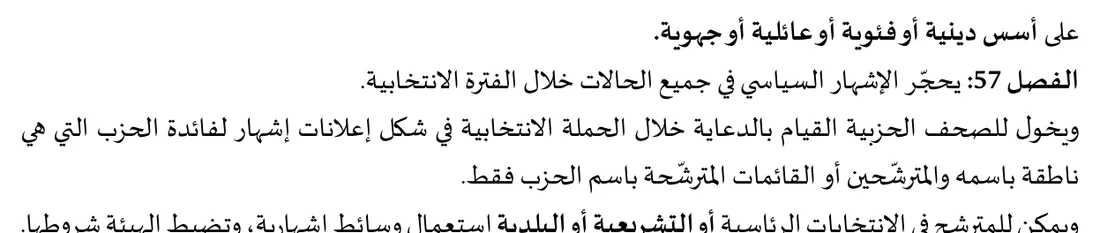
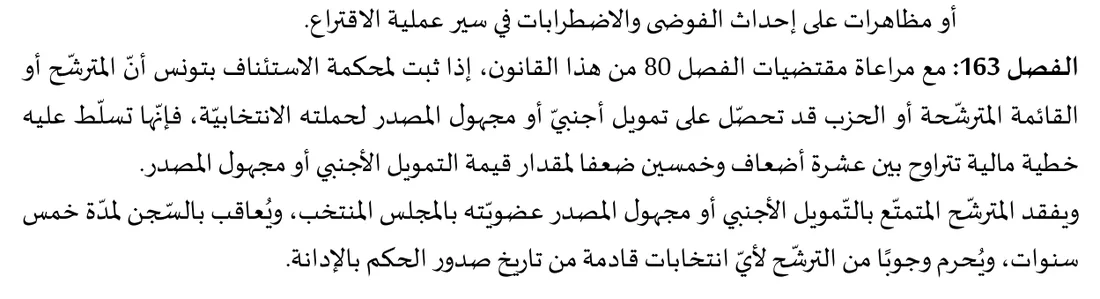
Chapter 57 prohibits political commentary in all cases during the election period. Section 80 prohibits campaign funding from abroad, including promotional gifts from foreign sources. And the penalty in chapter 163: Foreign funding or an unknown source exposes the candidate to a fine of between 10 and 50 times the amount, loss of his seat, and 5 years in prison.

ISIE prohibits non-users from using publicity to benefit candidates, with or without it. On August 21, 2024, weeks before the presidential campaign, the commission added a new rule to its resolution 546: The candidate's agent must report any advertisements made to him or her without his request, and prove that he or she has asked the platform to block pages that are not his or her own, otherwise the cost will be deducted from his or her spending ceiling. The same decision makes foreign funding or an unknown source a reason to reject the campaign account.
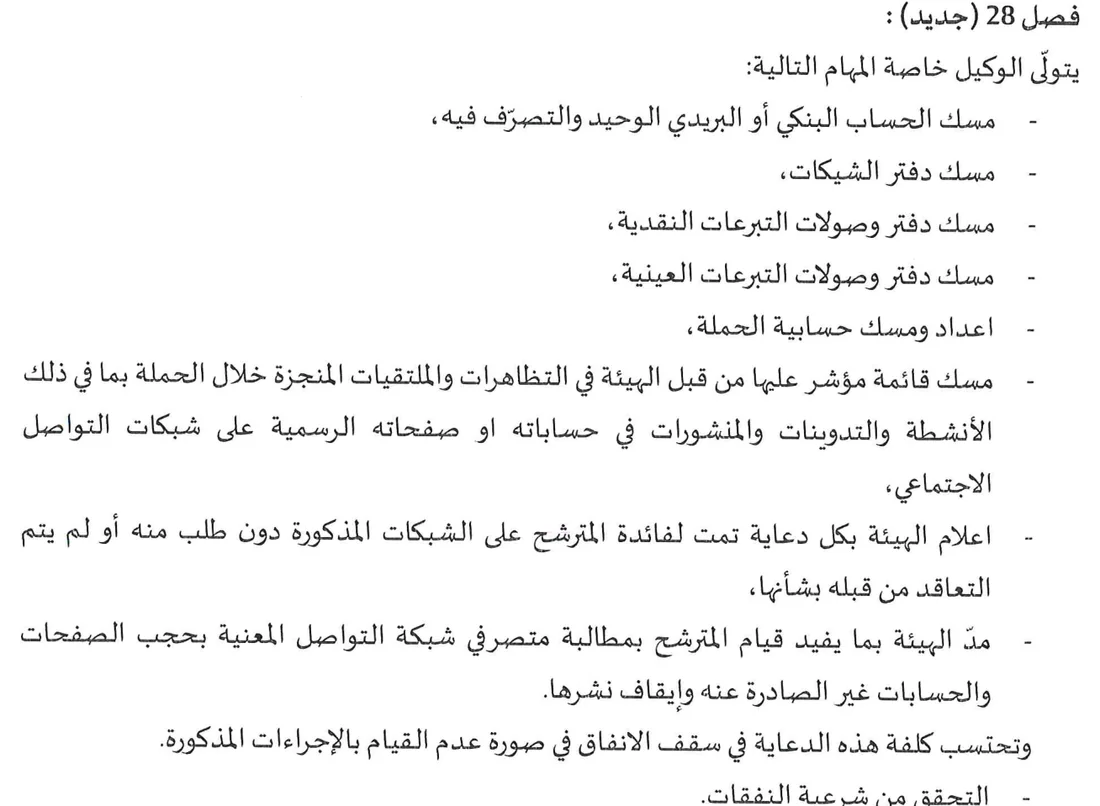
META, for its part, places Tunisia among the countries that impose a pre-license on every political announcement. The advertiser must be a resident of the target country, prove his or her identity with a local document, and have a mandatory line on it: Funded by who, then the name of a person or entity. Without that line, no one knows who sees the ad as a paid political advertisement, nor who pushes it.
An ad published without this notice is stopped by Meta, but only after it has appeared. Elyssa documented 276 political ads out of 626 in this situation.
276 ads out of 626 reached the public before Meta stopped them
So the rules exist, in law and at the platform. The question this investigation follows: to whom are they applied?
2019: thirty pages with no names
It was September 2019. A nonpartisan constitutional law professor leads the first round of the presidential election with 620,711 votes, or 18.40% of the vote. In the second round, he gets 2,777,931 votes, or 72.71%.
His campaign spent no more than 18,965 dinars in the first round. The Court of Auditors' report estimates the cost per voice in his campaign at 0.030 dinars, against an average of 1,980 dinars. On September 13, 2019, the candidate announced that he had made no political announcements.
A year later, in October 2020, the Court of Auditors published its annual report on campaign finance for 2019. And in the seventh appendix: 30 unofficial pages support Kais Saied, followed by 3,045,466 subscribers.
A campaign with limited resources, and pages with millions of followers
These pages are run by 120 supervisors: 85 in Tunisia, 35 abroad, of which 24 in France, 3 in Saudi Arabia, 2 in the United States, 2 in Italy, and one supervisor in both Turkey, Germany, Canada and China.
35 administrators out of 120 outside Tunisia, most of them in France
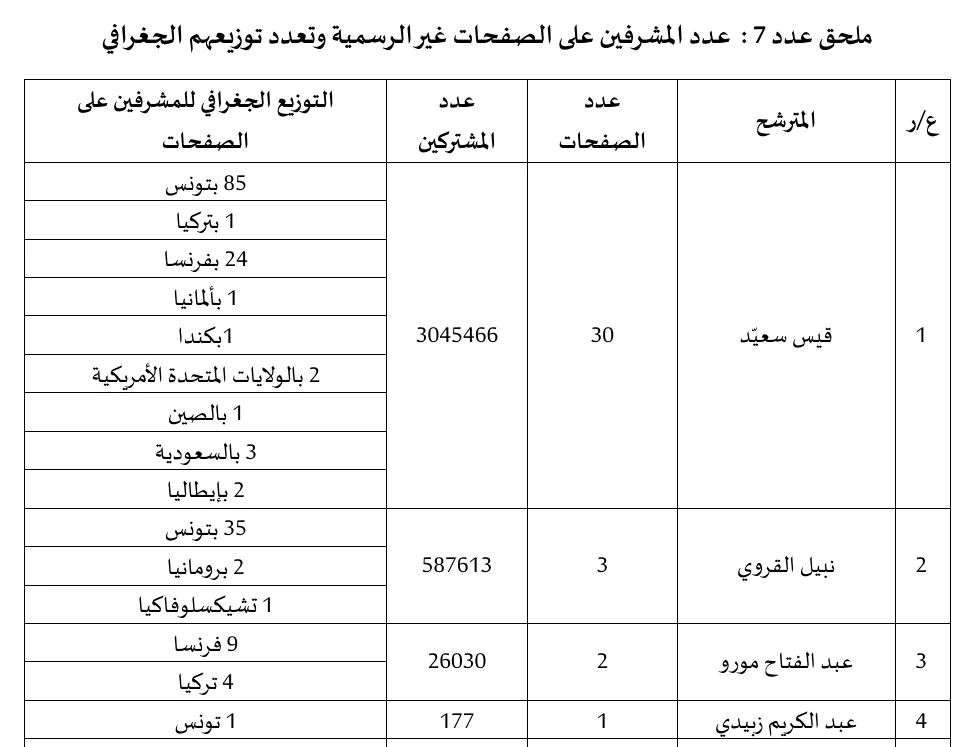
In its tenth annex, the Court identified 7 sponsored posts out of 273 posts on an unauthorised page bearing his name.
And the court is accurate in its sentence. You haven't established a direct link between these pages and the candidates. But she wrote that the cost of publicity was most likely paid in hard currency, and that the risk of foreign funding was high. And the phenomenon was not limited to one candidate: The report documents coordinated page networks for other candidates.
Even the number wasn't a deal. The report presents three censuses of the candidate's own pages: 30 pages, then 22 at civil society, then 14 at ISIE. Three digits for one phenomenon, no name published.
Three bodies, three figures, and no published name
And in the election silence, the day speech is prohibited, the report recorded 25 violations in the first round, then 143 violations in his bet during the second round, versus 92 in his opponent's bet.
Elyssa identified a page named Kolna Kais Saied Raiss TounesShe was born on September 17, 2019, between the two rows. It is run by a sheriff in Tunisia and today has 63,000 followers. And she 's still paying. Announcement on February 6, 2025, in dollars, without mandatory warning. 12.
The names of the thirty pages have still not been published after seven years. And since 2019, pages have been working for the same candidate, with no body announcing who runs them.
25 July 2024:: four pages from Senegal
Summer 2024, Tunisia on the eve of a new presidential election. On 25 July, Republic Day, 4 pages are created on Facebook on the same day: Halumu li-majd az-zaman, andTounsi w rassi 3ali, andMontasiroun bi idhn Allah, andChabeb al-Massar. Each page has a single administrator. And in all four, the administrator's country is the same: Senegal 2 3.
One day, four pages, one country
Between 19 September and 1 October 2024, that is, during the campaign weeks, the four pages paid for 13 ads, all in US dollars 6. Their message is the same: we will vote only for Kais Saied.
And on 1 October 2024, five days before the vote, two of the pages published the identical text word for word 7.
From Burj al-Khadra to Bab al-Khadra, Professor President Kais Saied keeps his word
Text of a paid ad published by two pages on the same day, 1 October 2024
The rest of the text of these ads praises the president, and some of it attacks his opponents. Not one of them discloses who paid.
One birthday, one supervisor in the same country, the same text. These are coordinate marks. But it doesn't reveal who coordinated. And the size is small: Thirteen ads appeared between 6,000 and 15,000 times. Then Meta canceled the four pages, and she didn't publish anything about it in her reports.
And the disruption wasn't just about her. 110 political ads Elyssa documented came from pages she later disabled, including 18 pro-president ads. Meta closes the page, but she doesn't tell Tunisians why or who was behind it.
Why would someone in Senegal run pages calling for the election of Tunisia's president? And who paid for their ads? Elyssa found no answer in any public document.
The influencer group: from France, and in euros
The second thread starts with a page named Kairouan, Cradle of Civilisations. On 8 March 2023 it was renamed Tounes al-Ahd al-Jadid. Less than a month later, in April 2023, it paid in euros for an ad praising the president.
On the same day, I published a second page of the same text, letter by letter, in euro. Three days later, page three. The three pages are run by supervisors in France, with two supervisors in Tunisia. 13.
And on 4 August 2024, two months before the vote, it became Tounes al-Ahd al-Jadid the official page of a pro-president influencer based in France. Elyssa does not name him, because what matters to the investigation is the structure operating around him, not the person.
Elyssa tracked what links the pages to this effect, found nine pages. I've posted 31 endorsements, 26 of them in euros, 23 without mandatory warning, and not a single announcement revealing who paid.
The influencer group: payment in euros, and the funder absent
One of these pages is called Friends of Influence. She was born in June 2024, weeks before the campaign, and is run by three supervisors in France. Her ads continued until February 2025, four months after the vote.
and a page Tunisian Minister of Happiness A page of adult jokes was born on July 26, 2011, under a different name. Today, she has 200,000 followers and a political party rating on Facebook. It 's run by supervisors in France and supervisors in Tunisia. 14.
On 16 November 2024, a month after the vote, the page published a message of support for the president. It is identical word for word, and on the same day, to that of two pages in the influencer group.
A borrowed audience
In October 2026, Elyssa found that 4 pages in the group repost the influencer's own posts: of 13 posts, 11 are his.
And the interaction tells the rest. The influencer collected 1,182 comments on eight publications. The four pages, together followed by about 414,000 people, collected 67 comments on 32 publications. And...Tunisian Minister of Happiness, with two hundred thousand followers, gathered two comments.
The influencer gathers comments, and the pages that repost him do not engage
An audience gathered under a joke or a tourist sign, and then he got a political speech that didn't interact with him. That's not proof that followers are fakes. But it's a borrowed audience. It doesn't pick what it gets.
Run from France, paid in euros, and the funder absent.
Map of pages
This map collects the pages addressed by name and links: Country of supervisors, matching texts, common birthdays, and influencer connections. Click on any page or country to read what Elyssa documented. The lines are phenomenal links, and do not confirm the management unit or source of funding.
to read what we documented about each page and each country.
United Kingdom, Kuwait and Togo: pages that change their names
A page born in 2016, run by a supervisor in Britain. In the autumn of 2021, I paid in pounds sterling for an announcement saying that the president of the republic deserves all the support from Tunisians. And then it became a cooking page named The Tastiest Foods On 2 November 2025, then Neutral in the service of Tunisia On 23 May 2026 15.
Another page, born on 9 April 2021, is run by 3 overseers in Kuwait, and has changed its name 5 times. On July 27, 2021, I paid in dollars for a message attacking the president's opponents. It's called today. Broker of Ideas 16.
andKolna Tounes w Kolna Kais Saied It was created in May 2024 under another name. It has 108 thousand followers and is run by 9 administrators in Tunisia, among them one in Togo.
and a page Kais Saied, Building and Construction She was born after the vote, in November 2024. I paid in euros for an ad defending the president. She's hiding her country, and 131,000 people are following her, and she's changed her name four times, most recently on September 2, 2026. 17 18.
A page born on May 1, 2025 as a politician, paid for in euros the next day with an announcement that the president would restore rights to Tunisians. Then a year later, it turned into a candy page. Elyssa got its current name because it became a business. 19.
Pages that change their names
Neutral in the service of Tunisia
- Created, with its administrator in the United Kingdom
- Pro-president ad in pounds
- Becomes The Tastiest Foods
- Becomes Neutral in the Service of Tunisia
Tunisian Minister of Happiness
- A jokes page is created
- Identical message of support
- Political party, 200 thousand followers
Sweets page
- Created under a political name
- Pro-president ad in euros
- A page selling sweets
Kais Saied, Building and Construction
- Created after the vote
- in euros defending the president
- Fourth name change
And the picture is wider than these examples. The 222 pages that published political ads are run by administrators in 29 countries other than Tunisia. 40 pages hide their administrators' country entirely 20, and 35 pages are no longer available. Among these countries are well-known media outlets run from abroad, which are not counted among the political pages.
Of 31 pages that published pro-president ads, 18 changed their name at least once, which is more than half.
Where the pages are run from
Pages created for one purpose and ending up serving another. The audience moves with the banner without being consulted: a citizen following a cooking or jokes page finds themselves facing funded political messaging.
Pro-president ads in numbers
Of 626 political ads, 67 support the president, published by 31 advertisers, and were shown between 370 and 470 thousand times.
Pro-president ads: the funder is absent
Not a single one of them has a sponsored name. And the mandatory alert is missing for 40 ads, that's 6 out of 10. And every ad featuring his currency was paid in foreign currency: Basically in euros, 33 ads, then in dollars, 21 ads.
Every pro-president ad whose currency appeared was paid for in a foreign currency
Half of these ads, 34 ads, came from pages whose administrators are all outside Tunisia. Meta removed 7 of them.
A campaign without an election
The support pages didn't stop at the polling. 24 ads supporting 67, or more than a third, were published after October 6, 2024. There were 27 endorsements in 2024, then 18 in 2025.
Pro-president ads continue after the vote
This practice is not limited to support pages. Opposition pages to the president also post paid political ads without revealing who finances them, some of which are run from the outside. Hiding the financier isn't one-sided, and the same rules apply to everyone.
And the question of accountability remains. Since 2023, critics of the authority have been sued for what they've posted online. As for the supported pages run from outside, Elyssa didn't find a single official announcement of their pursuit.
An army of fake accounts?
The paid ad is a small part of the picture. It does not measure free posts, nor accounts that comment and share, nor what public media broadcast.
Elyssa analysed thousands of comments under the posts of political pages, and kept no name.
No army copies the same comment
The result is as follows: No army copies the same comment. Recycled texts are less than 1%, and most of them are common myths. Under the pro pages are criticism of the president, and mutual insults. A discussion is more like a people discussion than a programmed account.
Does that mean there's no hypothetical calculations? I'm not. Facebook blocks what it calls annoying comments before they show up, and what Elyssa spotted dates back to October 2026, not the campaign.
What Meta reports say
In Meta reports of coordinated misconduct since 2019, there's no mention of any network working for the president. And its only Tunisian network, 446 pages removed in 2020, worked in the 2019 presidential elections for another candidate, as documented by the Digital Criminal Research Laboratory.
The only Tunisian network in Meta reports
In Meta's report on that network, a detail is known to the reader of this investigation: Pages have shifted from non-political topics to politics, with major changes in names and supervisors. And the ads were paid in euros and dollars, about $331,000.
As for Freedom House, in its report on internet freedom in Tunisia for 2024 it documented smear campaigns organised by pro-government accounts against its critics.
What clearly emerges is the borrowed audience: pages with hundreds of thousands of followers, created under other names, reposting the same voice. The audience does not engage, but it receives.
Who is questioned, and who is not
On December 19, 2023, Human Rights Watch documented 22 cases by Decree No. 54 against authorities critics. And most of it started with complaints from government officials. The Attorney General alone has filed at least five complaints in these cases.
Ordinance No. 54, in its original text, punishes publishing fake news on the networks with five years in prison and 50,000 dinars fraudulently, and double the penalty if the target is a public servant.
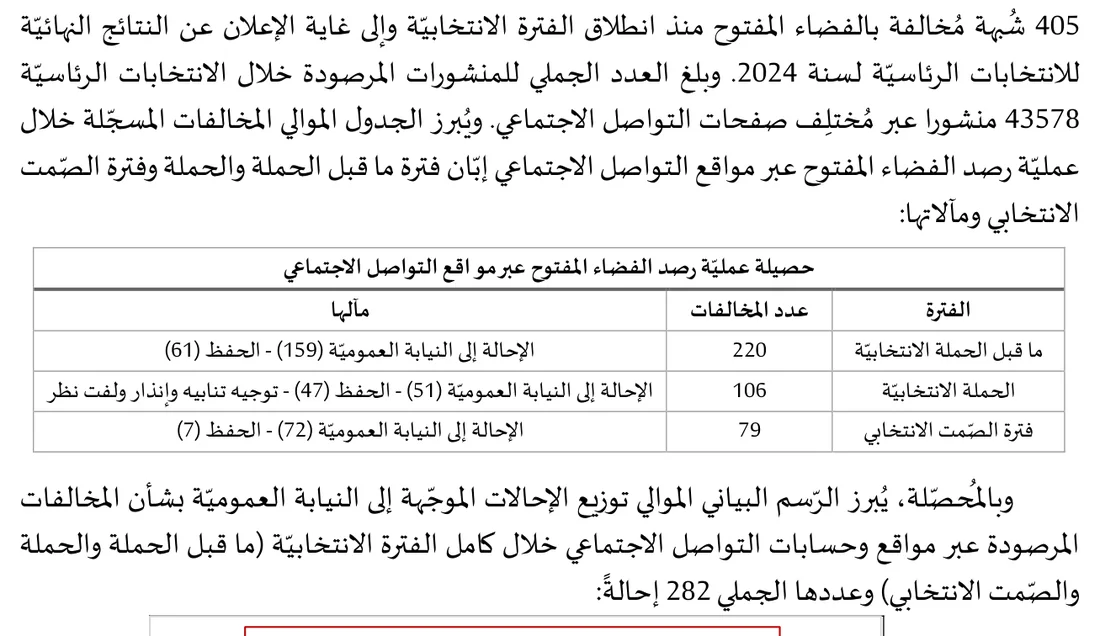
In the 2024 campaign, ISIE spotted 43,578 publications, registered 405 suspected violations, and submitted 282 files to the prosecution: 159 before the campaign, 51 during it, 72 in election silence. The agency said in its 2024 activity report that it had detected funded and unfunded Facebook pages. The report does not mention the names of the pages referred to, nor the beneficiaries of each infringement.
282 cases referred to the prosecution, and no page name published
In the 2023 local elections, the Commission identified 12 sponsored posts on the pages of 6 candidates. All the files were closed without action.
And on October 8, 2024, two days after the vote, the agency announced in a statement that any free accusation of falsifying results or falsifying them would be referred to the public prosecutor's office for the purpose of spreading and disseminating fake news.
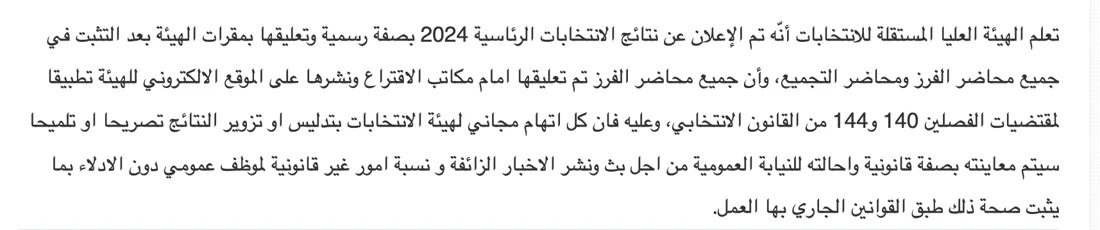
And before that, on September 9, 2024, the commission refused to approve two election monitoring organizations, I'm vigilant and observers, because of what it called suspicious foreign funding, as documented by Human Rights Watch on October 3, 2024. Foreign financing charges have been filed against the observers. And Elyssa didn't find a similar charge for pages run from outside calling for the election of the president.
Who was questioned
- 22 cases under Decree 54 against critics of the authorities
- Two election-monitoring organisations denied accreditation on charges of foreign funding
- Every unfounded accusation of fraud against the Commission is referred to the prosecution
Who was not questioned
- Pro-president pages run from Senegal, France, the United Kingdom and Kuwait
- No official announcement of proceedings against them
- 30 pages out of 2019 have not had their names published
On 28 September 2024, eight days before the vote, Basic Law No. 45 for 2024 was passed, transferring campaign finance control from the Court of Accounts to the Court of Appeal in Tunisia. The Court of Auditors unveiled the 30 pages for 2019. The new law requires the Court of Appeals to issue a general report which is published in the Official Gazette within six months of the results being announced. Elyssa didn't find this report published.
And the rule set by the agency in Oct 2024 requires each candidate to report publicity for his or her winnings without being asked. Elyssa has not found a published report on the supporting pages of this investigation.
Seven years on one line
- 2011
An adult jokes page is created, which will later become Tunisian Minister of Happiness, classified as a political party with 200 thousand followers.
- 2016
A page run by an administrator in the United Kingdom is created. Today it is called Neutral in the Service of Tunisia.
- 2019
Candidate Kais Saied states that he has carried out no political advertising.
First round: 620,711 votes, with declared resources not exceeding 18,965 dinars.
Between the two rounds, the page Kolna Kais Saied Raiss Tounes is created.
- 2020
Court of Audit report: 30 unofficial pages supporting the candidate, 3,045,466 subscribers, 120 administrators. The names are not published.
Meta removes a Tunisian network of 446 pages that worked in the 2019 presidential election for another candidate.
- 2021
A page run by 3 administrators in Kuwait pays in dollars for a message attacking the president's opponents.
The page run from the United Kingdom pays in pounds sterling for a pro-president ad.
- 2023
Kairouan, Cradle of Civilisations becomes Tounes al-Ahd al-Jadid. Less than a month later, a euro ad is published by three pages with the same text.
Human Rights Watch documents 22 cases under Decree 54 against critics of the authorities.
- 2024
4 pages calling for the election of the president are created, each with a single administrator in Senegal.
Tounes al-Ahd al-Jadid becomes the official page of a pro-president influencer based in France.
The Electoral Commission requires the candidate's representative to report propaganda carried out for his benefit without his request.
The Commission denies accreditation to two election-monitoring organisations over what it described as suspicious foreign funding.
The four Senegal pages pay for 13 ads, all in dollars.
Oversight of campaign financing is transferred from the Court of Audit to the Court of Appeal of Tunis.
The presidential vote.
Commission statement: every unfounded accusation of falsifying results is referred to the public prosecution.
Tunisian Minister of Happiness and two pages of the influencer group publish the same message of support.
- 2025
The page Kolna Kais Saied Raiss Tounes pays for a dollar ad without the mandatory notice.
A page is created under a political name, pays in euros the next day, then becomes a sweets page.
- 2026
The page run from the United Kingdom, after its cooking phase, takes the name Neutral in the Service of Tunisia.
What we know, and what we do not know
What we know
- Pages created on a single day, each with one administrator in Senegal, which paid in dollars to call for the election of the president.
- A group of pages run from France, paying in euros and reposting the voice of a single influencer.
- Administrators in the United Kingdom, Kuwait and Togo, pages that hide their country, and pages that changed names several times.
- Pro-president ads continued after the vote: 24 of 67.
- A law banning foreign funding, and a decision requiring the candidate to report propaganda carried out for his benefit, with no published trace of their application to these pages.
What we do not know
- Who paid for these ads.
- Whether there is a link between these pages and the president's campaign or any official body. We have no evidence of a link, nor of its absence.
- Names of the thirty pages identified by the Court of Audit in 2019.
- Reasons why Meta disabled the four pages and others.
The body that knows who paid is Meta, which holds the ad account data. The bodies with the power to ask are the Electoral Commission and the judiciary.
Voters have the right to know who is talking to them, and who pays to talk to them.
Elyssa offers a right of reply to everyone named in this investigation, whether pages, bodies or institutions, through the contact page, and corrects any error that is established according to the correction policy.
Evidence
Elyssa editorial team · 23 October 2026